

Disclaimer:
This is a popular science article, which aims to popularize the relevant knowledge in the field and promote science communication.
The video, pictures, text and other materials used in this article, if involved in the copyright of works, please contact us in a timely manner, we will properly handle according to law.
In addition, if there are errors in the content of the article, or inconsistent with the original journal article point of view, conclusion, also welcome to inform us, we will be the first time to modify, delete and so on.
At the same time, we warmly welcome scientific researchers and science enthusiasts in related fields to contribute, recommend, or discuss cooperation to jointly promote the development of industrialization.
DentaIn the process of repairing alveolar bone defects, traditional guided bone regeneration (GBR) surgery relies on manual assembly of barrier membranes and filling materials during the operation, which has problems such as low shape fidelity, loss/shift of the filling powder, and poor operational efficiency and consistency. Recently, Professor He Jiankang from Xi'an Jiaotong University and Associate Professor Kong Liang from the School of Stomatology of the Fourth Military Medical University proposed a multi-nozzle parallel printing strategy. By upgrading the traditional fused extrusion printing system, they fabricated a PCL-based barrier/filling integrated GBR scaffold for efficient and large-scale alveolar bone repair.
The research results of their team were published in the journal "Advanced Healthcare Materials" under the title "Multi-Printhead Parallel Printing of Polycaprolactone Barrier/Filler-Integrated Scaffolds for Alveolar Bone Repair".

Highlights: Innovation and Breakthrough
1. Manufacturing technology breakthrough: a 10-head parallel melt extrusion printing system was built to solve the problem of deformation caused by thermal interference among multiple heads during printing, enabling synchronous and parallel printing of thin-walled barrier membranes and TPMS porous structures. The manufacturing efficiency was improved by 10 times compared to a single-head system, demonstrating the potential for large-scale production of clinical implant products.
2. Integrated structural design: construct an integrated scaffold consisting of a dense barrier layer and a TPMS (Trabecular Porous Matrix System) porous filling layer. No surgical assembly is required. The barrier layer prevents soft tissue invasion, while the porous layer provides space for bone regeneration and mechanical support, achieving a balance between space maintenance and osteogenic induction.
3. Excellent regenerative ability within the body: the rabbit alveolar bone defect model confirmed that this integrated scaffold can effectively prevent soft tissue invasion, promote bone regeneration, and the repair effect is superior to the classic GBR protocol in clinical practice. The bone volume fraction and the number of trabeculae have significantly improved.
WHAT:Research Content
This paper addresses the clinical challenges of the traditional GBR technique, such as the cumbersome intraoperative procedures, the tendency of the transplanted materials to shift, and the limited regeneration efficiency. To address these issues, a PCL/nHA composite barrier/filling integrated scaffold with multiple nozzles for parallel printing was developed, as shown in Figure 1. This solution overcomes the technical problems of thermal interference and poor forming consistency in multi-nozzle fused deposition 3D printing, enabling high consistency and high throughput production. Moreover, its regenerative effect in alveolar bone defect repair was verified.
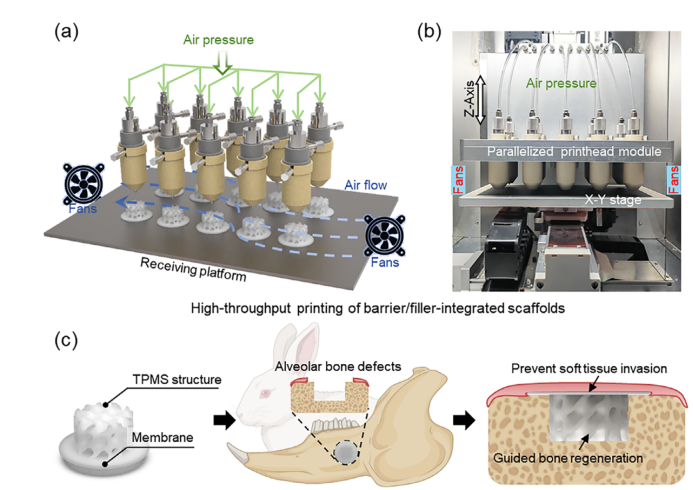
Fig. 1 The multi-nozzle printing design and mechanism diagram of the integrated scaffold for bone socket repair with barrier/filler components
The Solution: the technological edge
1.Construction of Multi-Head Parallel Printing System and Optimization of Temperature Control
The system integrates the XY-Z motion system, a 10-nozzle parallel module and a convective cooling fan. It is capable of adapting to the melt extrusion processing of medical-grade PCL and nHA/PCL composite materials. To address the problem of thermal crosstalk among multiple nozzles, a fan-assisted convective cooling combined with a single nozzle independent temperature compensation solution was adopted. The temperature difference at the nozzle tip was reduced from 2.6℃ to 0.5℃, ensuring that the structures printed by the 10 nozzles maintain a high degree of consistency in geometric dimensions and mechanical properties. At the same time, process optimization was completed, and the optimal printing parameters of 95℃ nozzle temperature and 140μm layer thickness were determined. This successfully achieved the stable formation of defect-free thin-walled barrier membranes and porous TPMS structures.
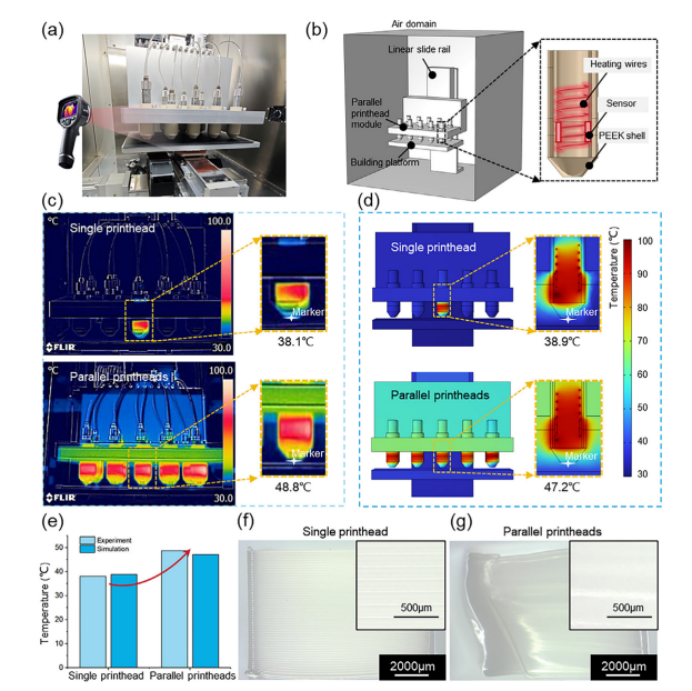
Fig. 2 Construction of Multi-Head Parallel Printing System and Optimization of Temperature Control
2. Integration of Stent Preparation and Multi-Dimensional Characterization
The material used was the nHA/PCL composite system. Through thermogravimetric analysis and gas chromatography-mass spectrometry, it was confirmed that the solvent HFIP had been completely removed, and the biological safety met the medical standards. The structural characterization results showed that the thickness of the barrier membrane was approximately 200 μm, and the interlayer tear strength reached 10.0 - 12.1 N. The mechanical properties were significantly superior to those of commercial collagen membranes. The TPMS porous structure had a uniform porosity, nHA was well dispersed in the matrix, the compressive modulus was 53.4 ± 3.1 MPa, and the compressive strength was 4.4 ± 0.3 MPa. It was highly compatible with the mechanical characteristics of jawbone trabeculae. The 10 parallel-printed scaffolds showed no statistical differences in key indicators such as thickness, mechanical strength, and porosity, and had excellent batch-to-batch stability, which could meet the requirements of clinical large-scale production.
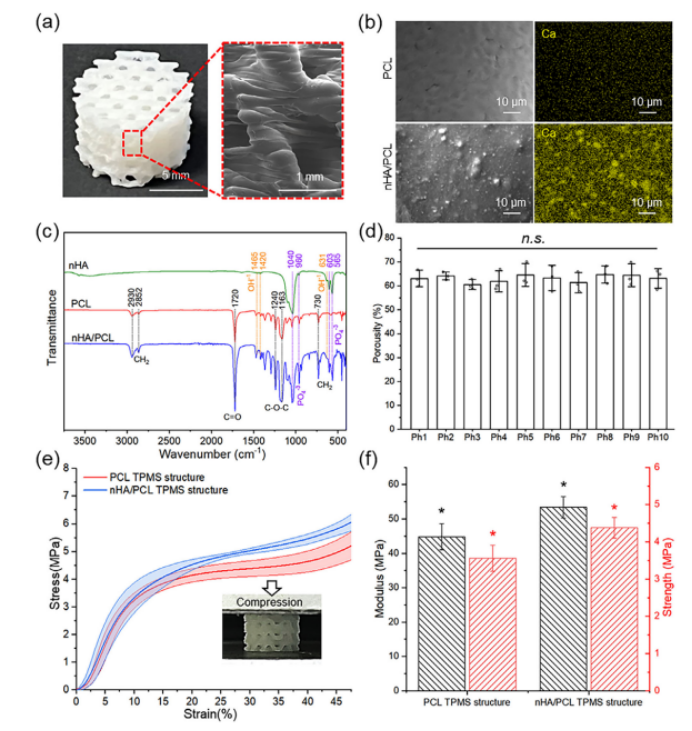
Fig. 3 Piezoelectric Structural Characterization of Multi-nozzle Composite Integrated nHA/PCL Stent
3. Verification of the effect of internal alveolar bone repair
This study successfully established a 6mm critical-sized alveolar bone defect model in rabbit mandibles, and set up four groups for control experiments: the blank group, the integrated scaffold group, the commercial bone powder + 3D printing barrier group, and the commercial bone powder + collagen membrane group. The imaging results at 12 weeks after surgery showed that the bone volume fraction (BV/TV) of the integrated scaffold group reached 41.6 ± 6.5%, and the number of trabeculae was significantly higher than that of the blank group. There was no significant difference compared with the classic GBR group in clinical practice, and the bone contour remained intact. Histological observation further confirmed that the 3D printed barrier membrane could effectively prevent the invasion of fibrous tissue throughout the process. The bone tissue in the TPMS porous scaffold was fully ingested, the bone-scaffold integration was tight, and no problems such as material collapse or transplantation particle displacement occurred. The overall repair effect was stable and reliable.
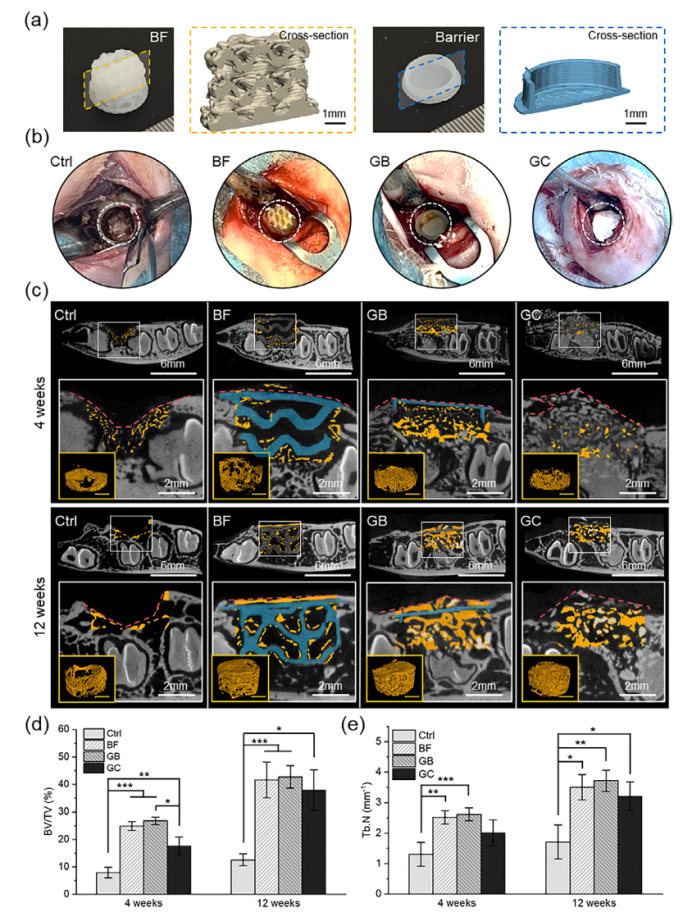
Fig. 4 Schematic diagram of in vivo experimental verification of alveolar bone repair in the body
The dense PCL barrier layer of the scaffold can maintain the bone regeneration space for a long time, and effectively overcome the problems of rapid degradation of collagen membrane and insufficient mechanical properties. The nHA/PCL composite TPMS filling layer can provide a good osteogenic microenvironment, which can provide a good basis for bone regeneration, it can promote the adhesion, proliferation and mineralization of bone cells. The integrated design simplifies the clinical surgical process. The multi-nozzle printing technology can achieve high-throughput production, it provides a large-scale manufacturing solution for standardized and personalized alveolar bone repair implants.
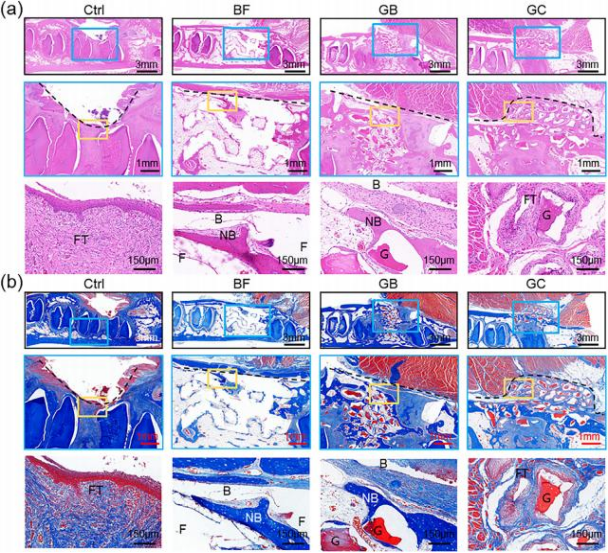
Fig. 5 Postoperative 12-week tissue section staining schematic diagram
Conclusion
In this study, a 10-nozzle parallel module was integrated into the melt extrusion printing system, combined with convective cooling and independent temperature compensation, to overcome the problem of multi-nozzle thermal crosstalk, to achieve high-throughput and high-consistency preparation of barrier/filling integrated GBR scaffolds. The scaffold can effectively prevent soft tissue infiltration and promote bone regeneration in the rabbit alveolar bone defect model. The multi-nozzle parallel printing technology provides a new path for the large-scale and standardized production of medical polymer implants, and has important clinical translation prospects in the field of oral and maxillofacial bone regeneration.