

Disclaimer:
This is a popular science article, which aims to popularize the relevant knowledge in the field and promote science communication.
The video, pictures, text and other materials used in this article, if involved in the copyright of works, please contact us in a timely manner, we will properly handle according to law.
In addition, if there are errors in the content of the article, or inconsistent with the original journal article point of view, conclusion, also welcome to inform us, we will be the first time to modify, delete and so on.
At the same time, we warmly welcome scientific researchers and science enthusiasts in related fields to contribute, recommend, or discuss cooperation to jointly promote the development of industrialization.
Dental implant restoration has become the first choice for the treatment of missing teeth, but peri-implantitis is always the primary cause of implant failure. How to achieve the dual goal of high-efficiency bacteriostasis and close integration of soft tissues at the implant-gingival interface has been a core challenge in the global field of oral biomaterials.
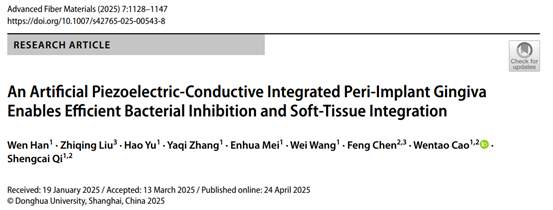
Recently, Shanghai stomatological hospital affiliated to Fudan University and Tongji University research team published important research results in the international authoritative journal AdvancedFiberMaterials, and successfully constructed a piezoelectric-conductive integrated artificial implant around the gingival (PiG) , it opens up a new path for the development of high-performance implant materials.
 Highlights: Innovation and Breakthrough
1. The world's first: the first piezoelectric-conductive dual-function integration of artificial implants around the gingival design, bionic natural gingival barrier role..
2. Double-effect Synergy: ultrasonic-triggered piezoelectric dynamic sterilization + neutrophil extracellular traps (NETs) synergistically inhibit bacteria, while electrical signals promote gingival soft tissue regeneration.
3. Non-invasive accessibility: intervention can be achieved with the help of daily ultrasound equipment such as electric toothbrushes, getting rid of the limitations of large medical equipment, and has great potential for clinical translation.
4. Interface Stability: the material and titanium substrate combination is firm, excellent hydrophilicity, stable electrical properties, both safety and long-term.
WHAT:Research Content
The PVDF/Batio:/MXeae piezoelectric films were prepared by electrospinning on titanium implants modified by plasma activation and polydopamine, and then the PEDOT conductive network was constructed by EDOT in situ polymerization, finally, the PiG composite functional interface was obtained.
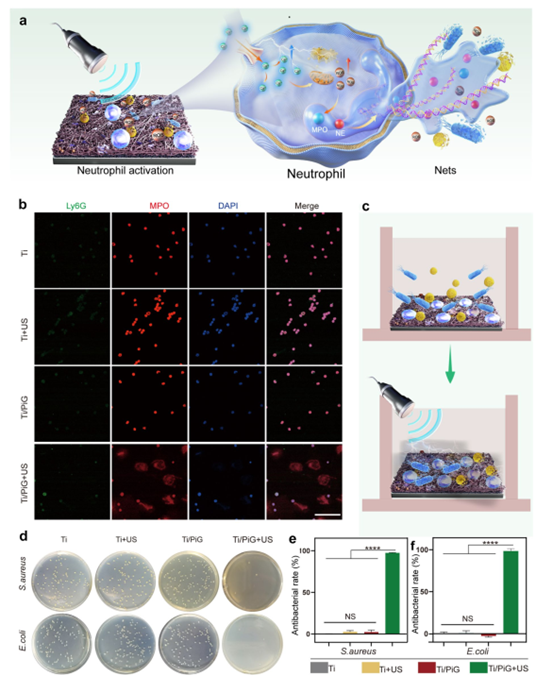
1. In vitro experiment: PiG can produce reactive oxygen species (ROS) such as hydroxyl free radicals and induce the formation of NETs under ultrasound. The inhibition rate against Staphylococcus aureus and Escherichia coli is about 80% The bacteriostasis rate was close to 99% after cooperating with neutrophil.
2. Cell Experiment: piezoelectric signal significantly enhanced the adhesion, proliferation and collagen secretion of fibroblasts.
3.Animal Experiment: in the subcutaneous infection model of rats, the clearance rate of Staphylococcus aureus on the implant surface in the ultrasound + PiG group was 98% , and the effect of inflammation resolution and soft tissue integration was significantly better than that of the control group.
WHY: research background and significance
Dental implants are widely used in clinical practice, but the incidence of peri-implantitis is high, which is easy to cause gingival recession, slip absorption, and ultimately lead to implant loosening and shedding. Traditional antibacterial strategies have some defects, such as antibiotic resistance, metal ion toxicity, and limited penetration depth of photodynamic therapy. The lack of gingival sealing at the gingival region of the implant is a key weak link in bacterial invasion.
Staining and soft tissue occlusion are two major clinical pain points, which provide a new non-invasive and non-antibiotic prevention and treatment paradigm for peri-implantitis, and are expected to significantly extend the service life of implants.
The Solution: the technological edge
1.The preparation process is mild and the interface bonding is firm
Titanium substrate was modified by plasma activation and polydopamine, which greatly improved the adhesion between the film and the substrate. The process of electrospinning and in-situ polymerization was simple, controllable and large-scale production. The interfacial bonding strength was verified by tensile test, and the mechanical stability was excellent.
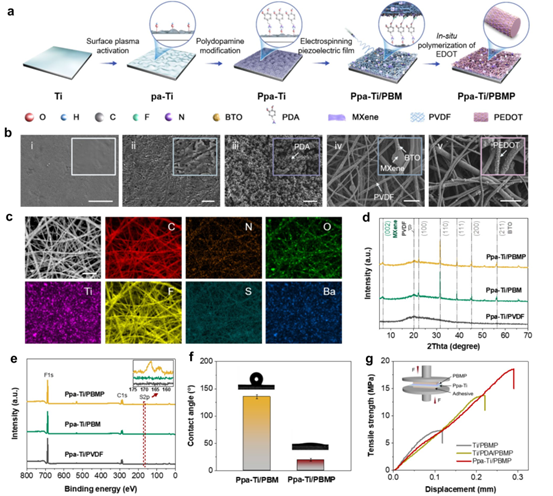
Fig. 1 Preparation and characterization of piezoelectric and conductive integrated PiG
2. Piezoelectric-conductive Synergy, outstanding electrical properties
BATIO3 and MXeue synergistically enhance piezoelectric response, and PEDOT conductive network accelerates charge transfer and separation. Under the stimulation of 1W/CM² ultrasound, the output voltage can reach 1.2 V, the charge transfer impedance is low, the cycle stability is good, and the electromechanical conversion efficiency is greatly improved.
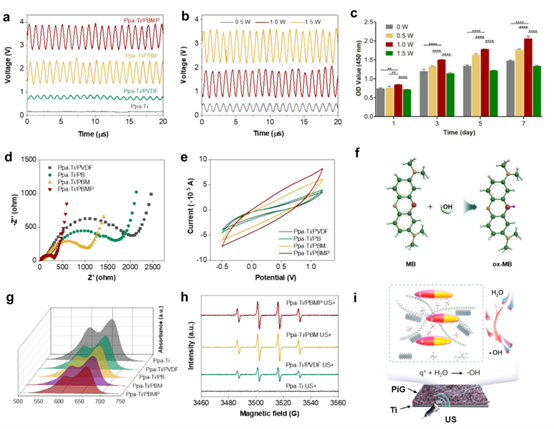
Fig. 2 Piezoelectric response and piezoelectric catalytic activity of PiG
3.Ultrasound-driven broad-spectrum bacteriostasis with no risk of drug resistance
The Ultrasound triggers piezoelectric catalysis to produce ROS, which directly destroys the bacterial cell membrane structure; at the same time, electrical signals activate neutrophil formation NETs, achieving a dual pathway of physical sterilization + immune sterilization, it is highly effective against gram-positive/negative bacteria and does not produce drug resistance.
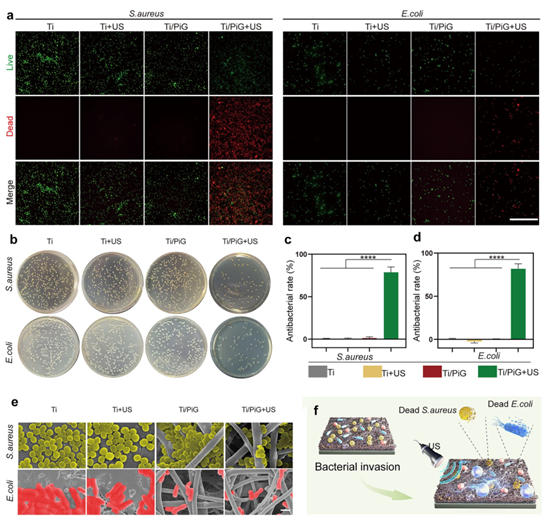
Fig. 3 Antibacterial properties of Ti/PiG activated by external ultrasound
4. CElectrical signals regulate gingival regeneration and build a barrier
The piezoelectric micro-electric field promotes the expression of fibroblast adhesion plaques, cell stretching and type I collagen secretion, and rapidly forms a dense gingival soft tissue sealing layer, which blocks bacterial colonization and invasion from the source, to achieve dual effects of anti-infection and promoting integration.
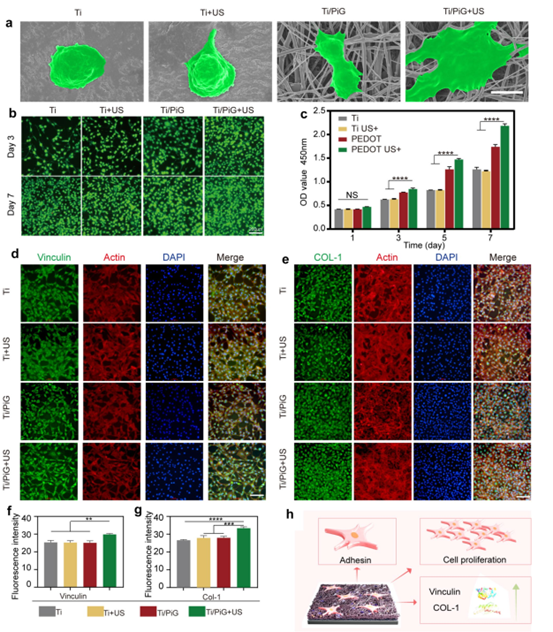
Fig. 5 Effect of titanium/polycaprolactone composite (Ti/Pigus) on NIH/3T3 cells cultured in vitro
5. Non-invasive and convenient, excellent biological safety
Only low-intensity ultrasound can activate the function, and can be used in combination with daily supplies such as electric toothbrushes. In vivo animal experiments show that there is no obvious damage to major organs such as heart, liver, spleen, lung and kidney, the whole body biocompatibility is good.
6. The clinical adaptation is strong, the application prospect is broad
It is suitable for surface modification of titanium and titanium alloy implants. It is compatible with the existing implant production and clinical processes. It does not need to be significantly modified and is easy to promote to oral implants, percutaneous implants and other fields.
Conclusion
In this study, the piezoelectric-conductive integrated PiG smart gingival interface was successfully developed to achieve synergistic and efficient bacteriostasis by ROS sterilization + NETs immune regulation under ultrasound stimulation, while strengthening fibroblast function through piezoelectric signals, which can be used as a novel tool for the treatment of gingival diseases, to promote gingival soft tissue integration.
The antibacterial rate in vitro is nearly 99% , and the anti-infection efficiency in vivo is 98% . This technology provides a non-invasive, non-antibiotic, home-accessible new solution for dental peri-implantitis, and promotes the intelligent bionic implant interface from the laboratory to the clinic, it is of great significance to improve the long-term success rate of implant restoration.