

Disclaimer:
This is a popular science article, which aims to popularize the relevant knowledge in the field and promote science communication.
The video, pictures, text and other materials used in this article, if involved in the copyright of works, please contact us in a timely manner, we will properly handle according to law.
In addition, if there are errors in the content of the article, or inconsistent with the original journal article point of view, conclusion, also welcome to inform us, we will be the first time to modify, delete and so on.
At the same time, we warmly welcome scientific researchers and science enthusiasts in related fields to contribute, recommend, or discuss cooperation to jointly promote the development of industrialization.
Human vascular organoids have great potential for application in vascular drug research and tissue repair engineering. However, the traditional liquid culture method leads to spontaneous cell fusion of human vascular organoids during the initial suspension culture stage, and it is unable to create a mechanical microenvironment suitable for cell growth. This greatly limits the uniformity of organoids under large-scale cultivation and also reduces the stability of vascular generation characteristics.
Recently, a team from Xi'an Jiaotong University and the Affiliated Hospital of Southwest Medical University proposed a viscoelastic culture medium based on xanthan gum (XG), which can regulate the fusion and development of vascular organoids. The related research results were published in the journal "Bioactive Materials" under the title "A viscoelastic suspension culture strategy modulating fusion and development in blood vessel organoids". 

Highlights: Innovation and Breakthrough
1. System innovation: For the first time, the viscoelastic culture medium constructed with xanthan gum was applied to the suspension culture of human vascular organoids. This effectively addressed two major problems in traditional liquid culture: spontaneous fusion of organoids and the lack of in vivo biomimetic mechanical environment.
2. Dual mechanical property design: The culture medium possesses both "rigidity and flexibility" characteristics. Under instantaneous external force, it presents a rigid barrier to prevent the contact and fusion of organoids; when organoids grow and generate long-term stress, it exhibits stress relaxation flexibility, continuously providing appropriate mechanical signals.
3. Significant improvement in cultivation effect: Significantly enhanced homogeneity and survival rate of organoids, with the retention rate increasing from 31.35% to 84.23%, and the coefficient of variation in size decreasing from 0.53 to 0.21; at the same time, promoted densification and pre-vascularization within the organoids, and the total length of subsequent angiogenesis increased by 124.1%.
4. Technology paradigm expansion: establish a culture strategy of pure physical regulation, which is different from traditional methods such as chemical inhibitors, dynamic stirring, and single-well isolation, and does not interfere with endogenous signaling pathways in cells, it provides a new research paradigm for the regulation of vascular development by mechanical microenvironment, and also provides a new path for the large-scale and standardized preparation of organoids.
WHAT:Research Content
To address the issues of fusion of human vascular organoids caused by traditional liquid culture and the lack of a biomimetic mechanical environment, this study prepared a chitosan-based dual-functional viscoelastic culture medium. This medium not only inhibits the fusion of organoids through a rigid barrier and improves sample homogeneity, but also provides mechanical signals through stress relaxation, promoting tissue densification and pre-vascularization, and significantly enhancing angiogenesis ability. It provides a new solution for the standardized preparation of human vascular organoids (hBVOs) and related mechanism research.
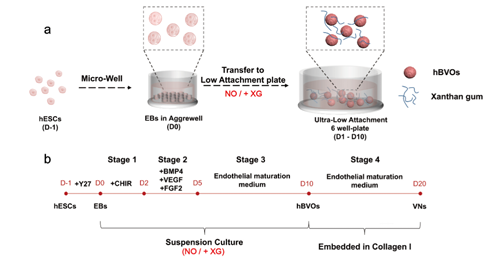 Fig. 1 Schematic diagram of hBVOs preparation
1.Construct a tunable viscoelastic culture system
Different concentrations of xanthan gum were added to the basic medium to form a three-dimensional viscoelastic network based on the physical and chemical properties of xanthan gum. The system has the ability of shear thinning and self-healing, to ensure the normal operation of pipetting, fluid exchange, resuspended and other conventional experiments, and pasteurization, long-term cultivation after the rheological properties of stability.
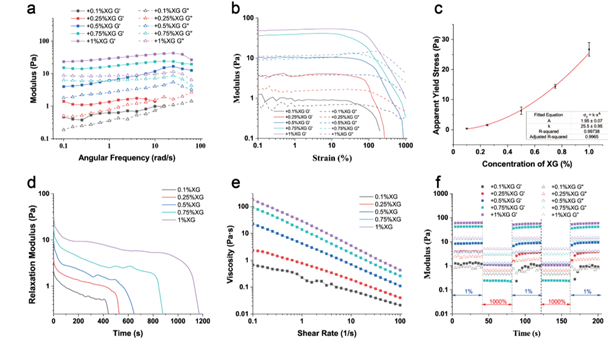 Fig. 2 The rheological properties of the viscoelastic medium containing XG
2.Physical barrier inhibition of organoid fusion
By taking advantage of the yield stress characteristics of the viscoelastic system, the organoids are fixed within the network structure to restrict their free movement and collisional contact. At the optimal concentration (0.5%), the system can form an effective physical barrier, significantly reducing the fusion probability. At the same time, the expression of E-cadherin is downregulated, further delaying the fusion process of the organoids.
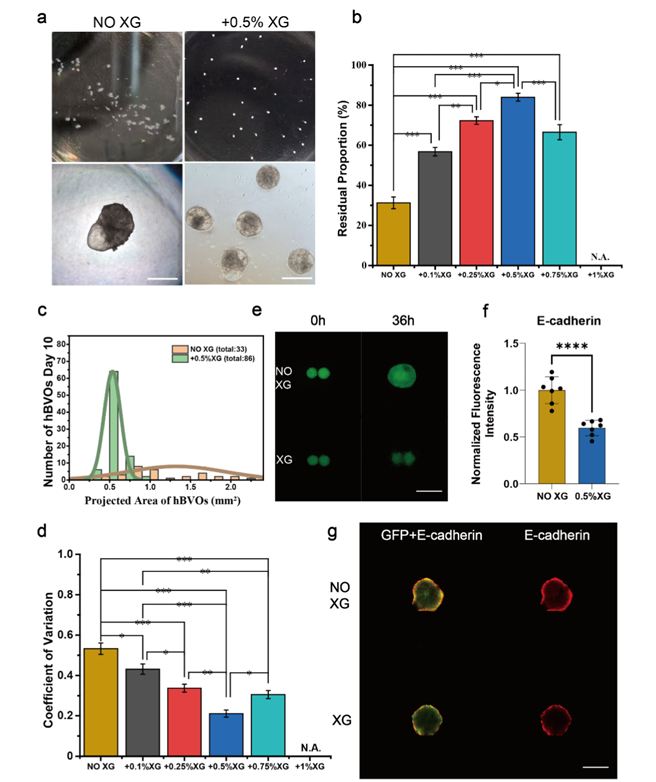 Fig. 3 Evaluation of resistance during viscoelastic culture
3. Constructing a biomimetic dynamic mechanical microenvironment
Based on the stress relaxation characteristics of the xanthan gum system, when the organoids grow and expand and generate continuous stress, the culture medium can adaptively deform, providing mechanical signals that are in line with the in vivo environment for cell growth. The dynamic mechanical effect can slow down the outward migration and distribution of organoid cells, promote the full contact and tissue remodeling of internal cells, and guide the orderly development of the internal structure of the organoids. 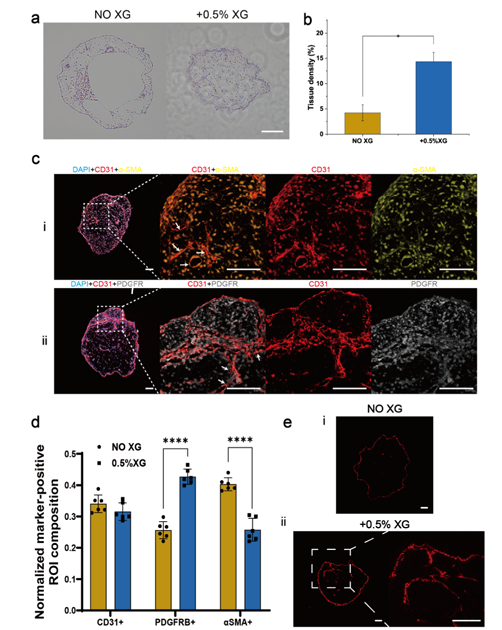 Fig. 4 The viscoelastic environment promotes the structural densification of hBVOs and the formation of pre-vascularized tissues
4. Enhance the ability of vascular regeneration
In this study, transcriptome sequencing and pathway function verification were used to further explain the molecular mechanism: viscoelastic culture microenvironment can significantly reshape the gene expression characteristics of human vascular organoids, the related signaling pathways such as mechanosensing, cell migration and vascular development are significantly enriched. Among them, the integrin signaling pathway regulates the proliferation and growth of organoid cells, the Notch signaling pathway dominates the orderly construction of vascular tubular structures, and the matrix remodeling-related genes are also synergistically expressed. 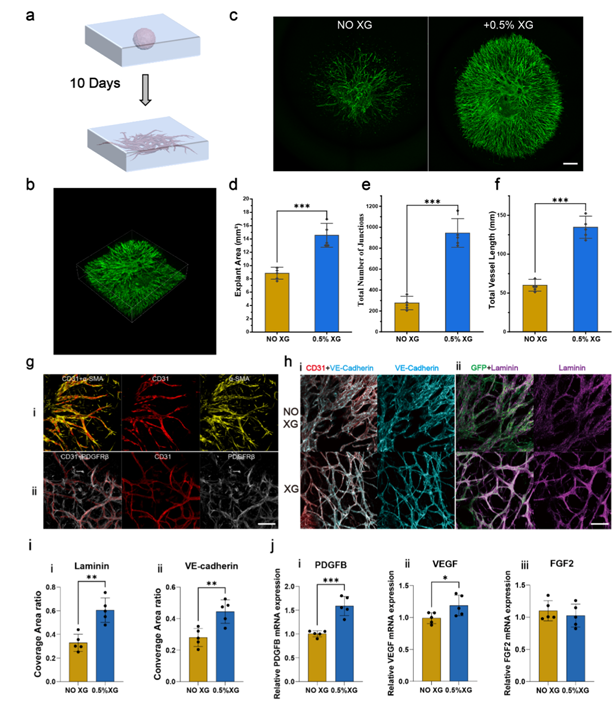
Fig. 5 The optimized viscoelastic environment enhanced the angiogenic ability of hBVOs in the ECM.
Conclusion
In this study, a xanthan gum-based viscoelastic culture system was constructed to solve the problems of easy fusion and lack of bionic mechanical environment in vascular organoid culture. The system inhibits organoid fusion and enhances homogeneity in a purely physical manner, while mimicking mechanical signals in vivo to promote tissue maturation and angiogenesis. The scheme is simple and practical, which is suitable for standardized mass production and provides a new model for related mechanism research. In the future, the universality of the technology will be further verified and its application in disease modeling, drug screening and regenerative medicine will be expanded.